Take real control of your Linux distros.On Windows and on macOS.
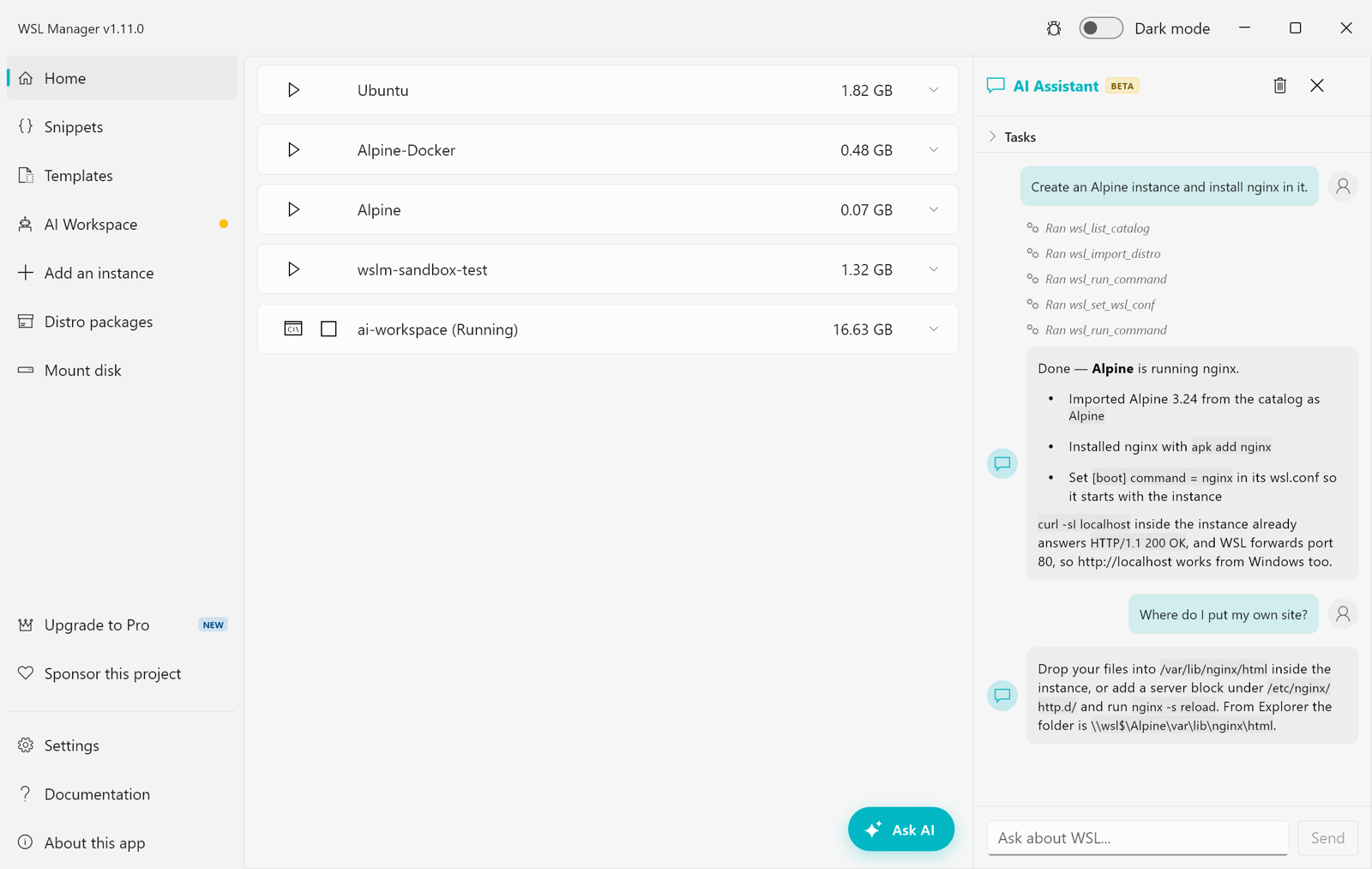
Every Windows Subsystem for Linux front end can start and stop a distro. WSL Manager moves them between drives, reclaims the disk space WSL quietly keeps, turns any Docker image into a distro without Docker installed, manages WSL on a second machine over SSH — and hands your whole environment to an AI agent through a built-in MCP server.
Windows 10 (1903+) or Windows 11 with WSL 2
The parts other WSL front ends leave out.
Starting and stopping a distro is the easy bit. Moving one to another drive, getting your disk space back, building an instance from a Docker image, or letting an agent work inside WSL — that is where WSL Manager earns its place.
Move, copy and compact
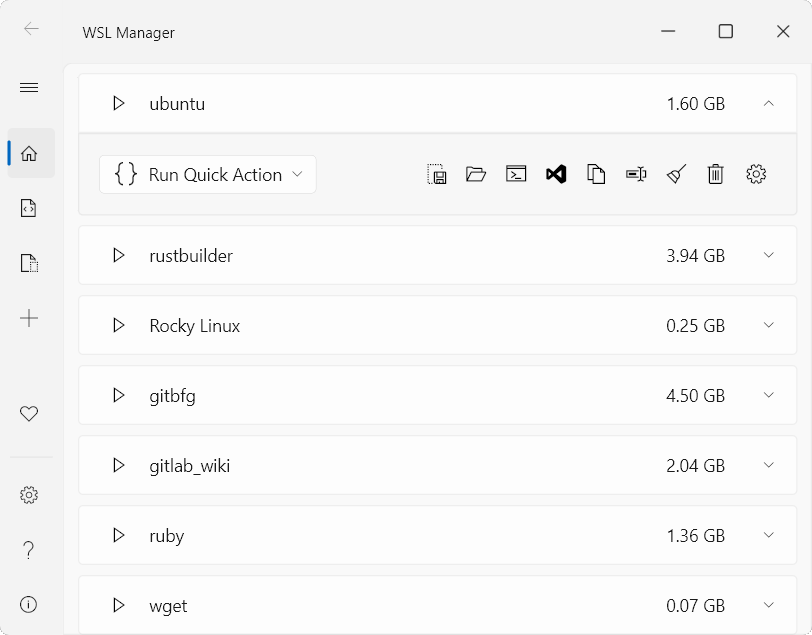
Move an instance to another drive, copy or rename it, back it up - and compact its virtual disk to reclaim the space WSL never gives back on its own.
Any Docker image as a distro
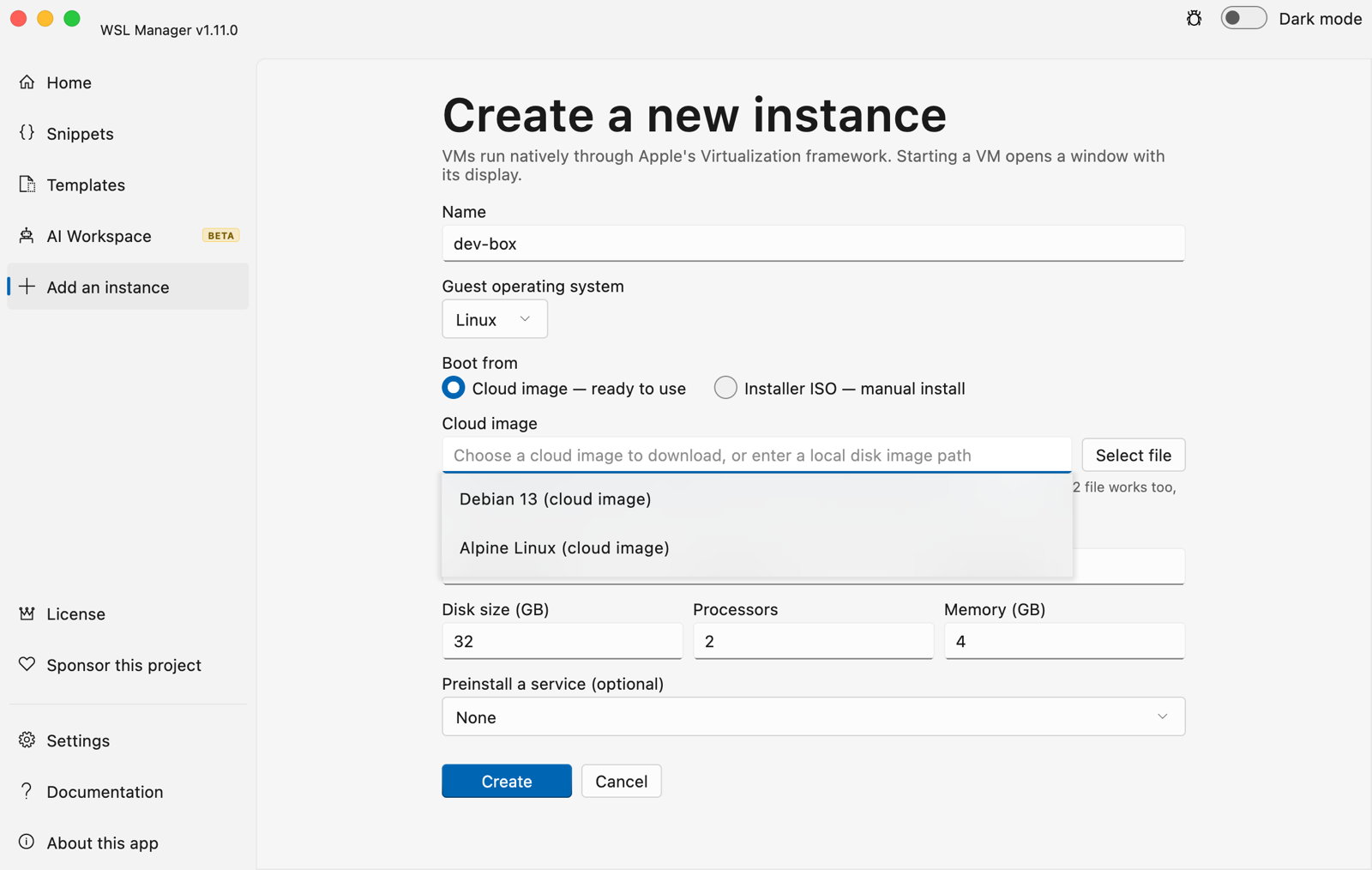
Pull an image straight from Docker Hub and turn it into a WSL instance. Docker itself does not need to be installed.
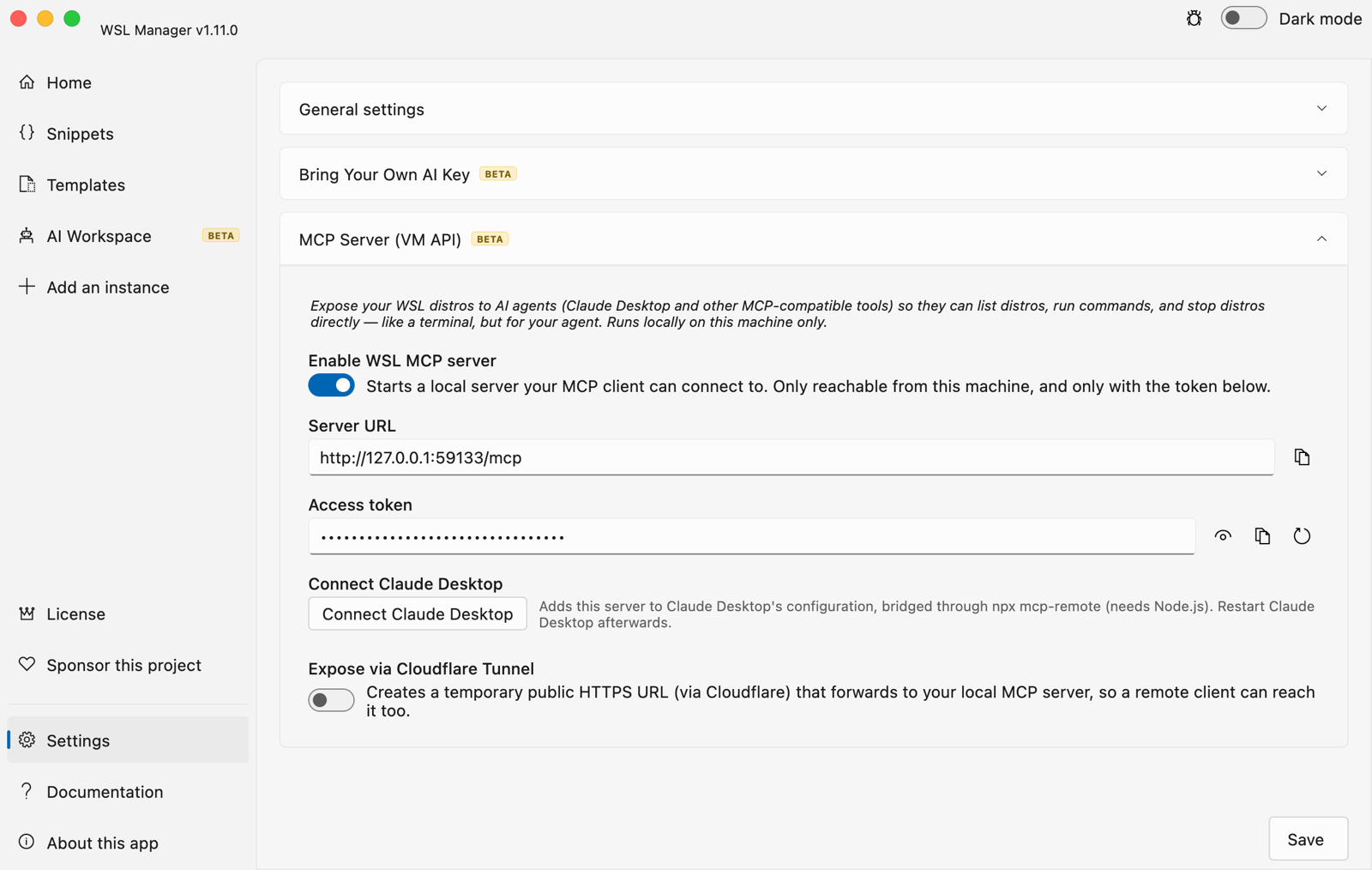
Let an AI agent drive your WSL
The built-in MCP server exposes your distros to Claude Desktop and other MCP clients, so an agent can list instances, run commands and hold real terminal sessions.
Everything else it saves you doing by hand.
The small things that add up: templates instead of repeating a setup, snippets instead of remembering a command, a GUI instead of editing .wslconfig, and one window for the distros on your other machine too.
Every distro, one place
Install, copy, rename, back up and delete instances. Ubuntu, Debian, Alpine, Kali Linux, openSUSE, SLES, or any rootfs WSL accepts.
Templates
Snapshot a configured distro and spin up fresh copies from it whenever you need one, instead of setting the same thing up twice.
Snippets
Keep your setup commands in the app and run them against any instance in one click. Open Windows Terminal, VS Code or Explorer inside a distro.
Settings without a text editor
systemd, automount, default user and start command per distro. Memory, processors, swap, networking and DNS in .wslconfig - all from a GUI.
Mount disks and VHDs
Attach a physical disk or a virtual disk to WSL, with control over partition, filesystem and mount options.
Remote WSL over SSH
Connect to a second Windows machine and manage its distros from here, as if they were local.
One app for every Linux machine you run.
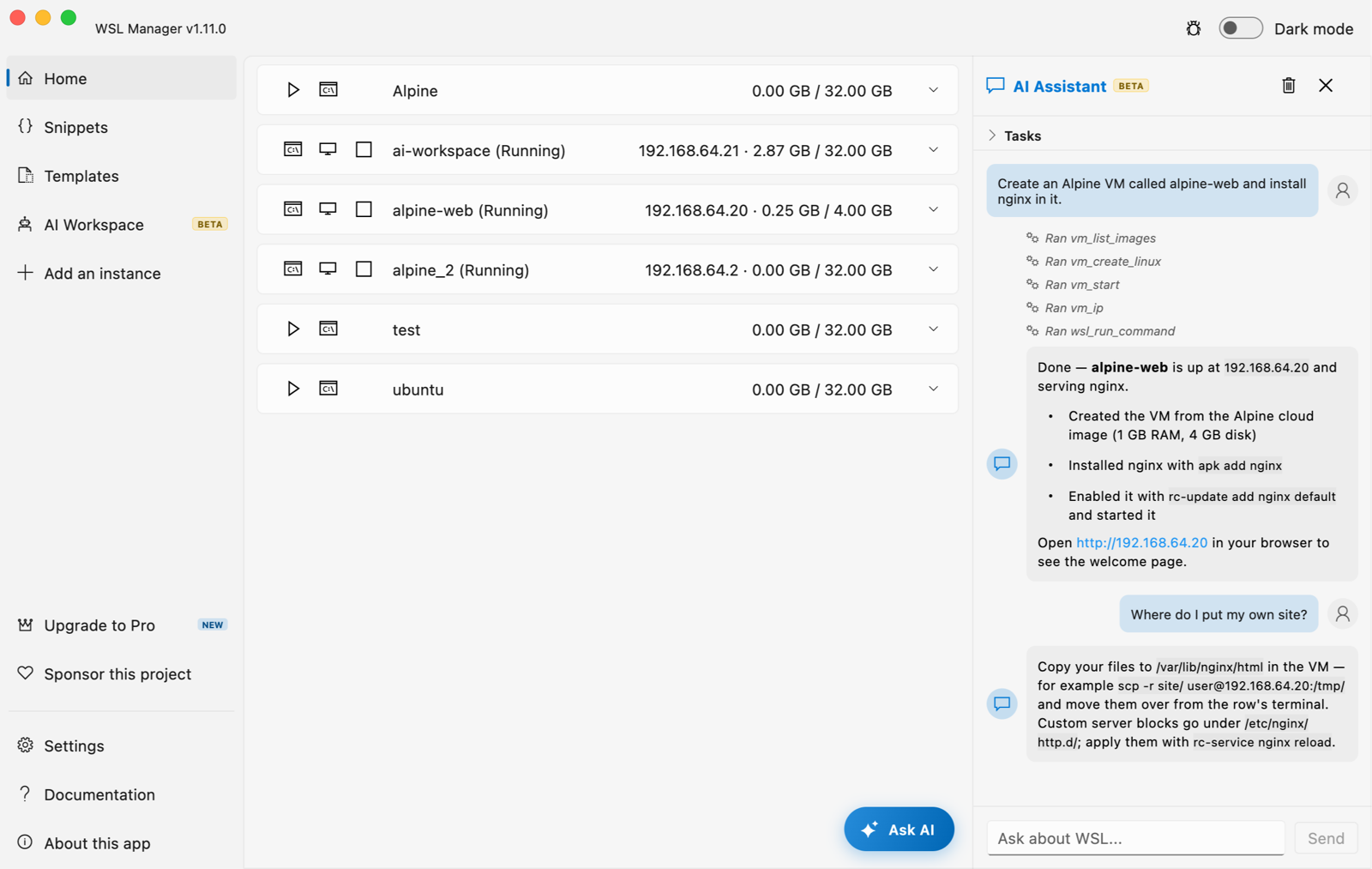
WSL distros on Windows, native virtual machines on macOS. Same interface, same snippets and templates, same AI assistant and MCP server. Pick the build for the desk you are sitting at.
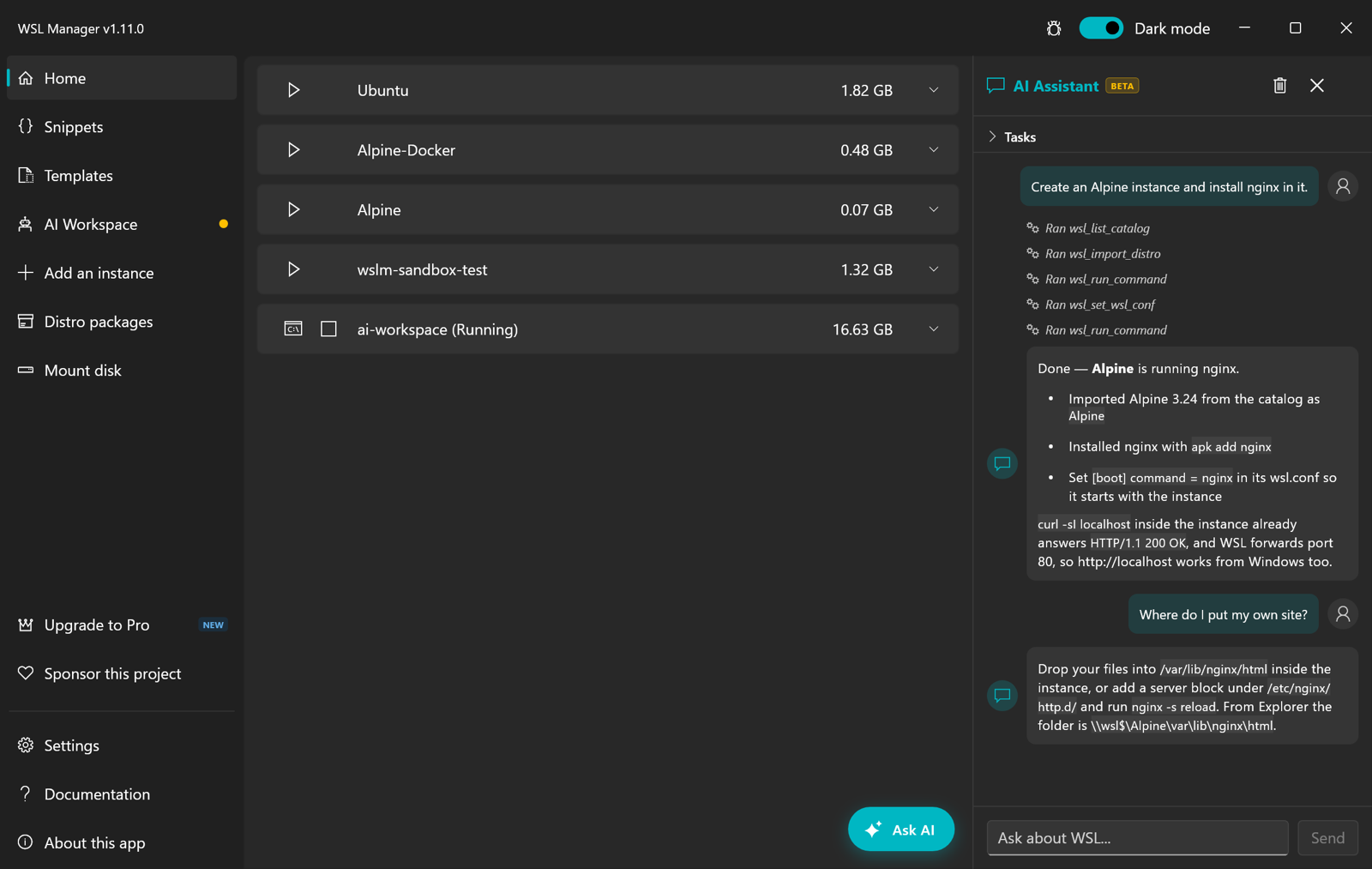
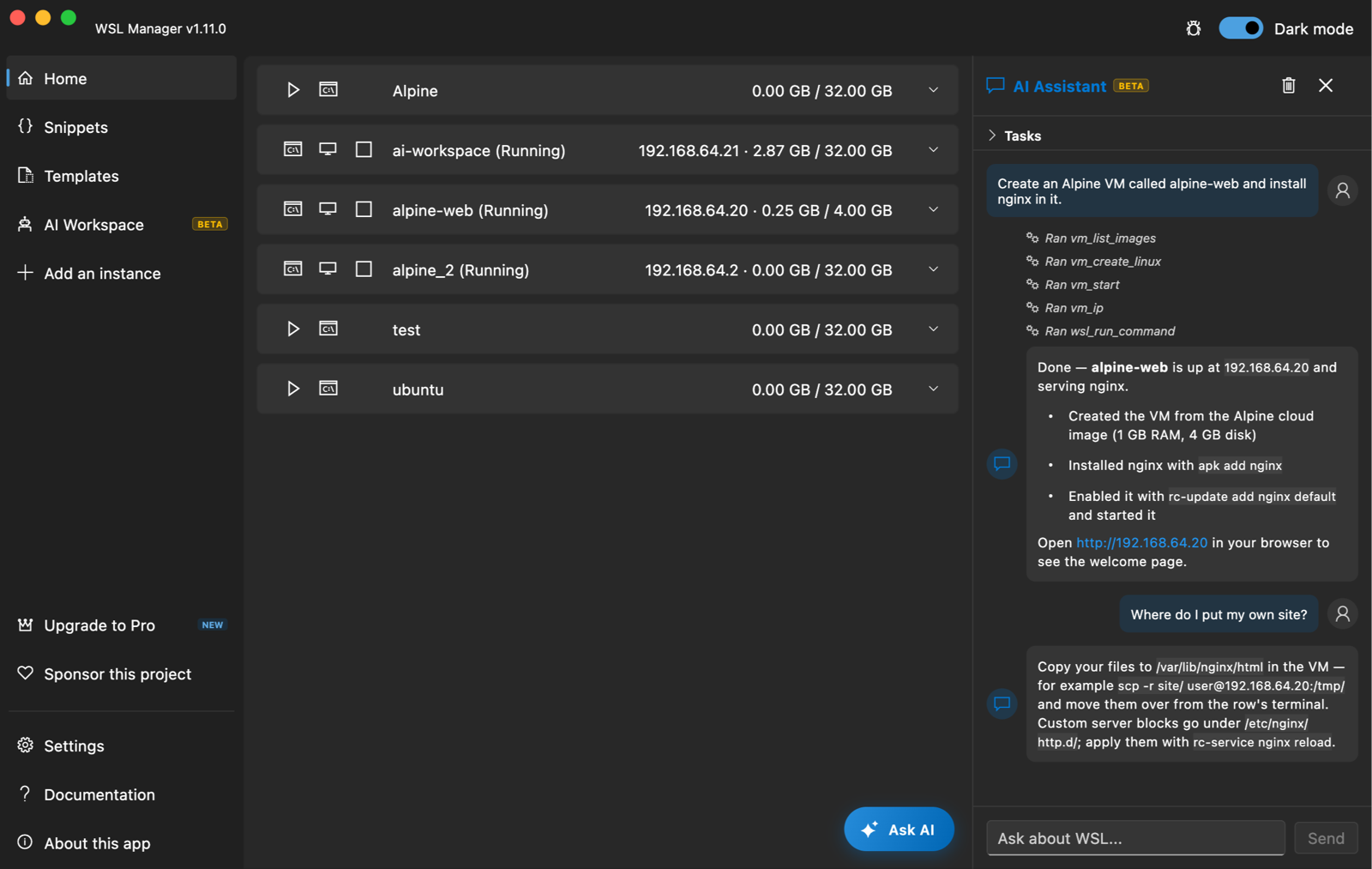
Windows 10 (1903+) or Windows 11 with WSL 2
Upgrade Your WSL Workflow with WSL Manager Today!
Join the thousands of tech enthusiasts who have revolutionized their development workflow with “WSL Manager.” Get started now and take your development game to the next level.
Frequently asked questions
If you have anything else you want to ask, reach out to us.
What are the system requirements for WSL Manager?
On Windows: Windows 10 version 1903 or later (or Windows 11) with WSL 2 installed. On macOS: an Apple Silicon or Intel Mac; the app manages native virtual machines through Apple’s Virtualization framework instead of WSL. macOS guest VMs need Apple Silicon.
How many Linux distributions does WSL Manager support?
WSL Manager supports a variety of Linux distributions, including Ubuntu, Alpine, Debian, OpenSUSE, Kali Linux, SLES, or any custom rootfs that is supported by WSL.
Can I run predefined scripts on my instances with WSL Manager?
Yes, with "Quick Actions," you can create, run, and share predefined scripts that run on your instances. Open VSCode, Windows Terminal, or Explorer in your WSL instance with just a click.
Can I customize my WSL instance settings with WSL Manager?
Yes, WSL Manager allows you to set custom start commands and users, edit the WSL config from a GUI, enable systemd, automount, or other settings.
Does WSL Manager support Docker integration?
Yes, you can even download Docker images and use them as your WSL base without the need for Docker to be installed.
Is the macOS version the same app?
Yes. It is the same interface, snippets, templates, AI assistant and MCP server. Because there is no WSL on a Mac, the instances it manages there are native Linux (and, on Apple Silicon, macOS) virtual machines rather than WSL distros.
What if my Linux distribution is not supported by WSL Manager?
You can import your custom rootfs and use it with WSL Manager.
Where can I download WSL Manager?
The Windows build is on the Microsoft Store. The macOS build ships as a .dmg attached to every GitHub release, and the source for both is on GitHub as well.
Does WSL Manager require any special permissions to install?
No, WSL Manager does not require any special permissions to install or use.